


The story of mental health support in the United Kingdom, particularly in London, is a fascinating blend of horror and hope. From the early days of institutionalized care to today’s focus on community-driven and service-user-centered approaches, the journey has been anything but straightforward. London’s mental health landscape reflects a rich and evolving history—one that mirrors societal attitudes and the growing understanding of mental well-being.
In this blog, Social Media and Digital Communications volunteer Junqian Dai dives into this captivating narrative, tracing the transformation of psychological and psychiatric support services in the capital. Join us as we explore the milestones and key shifts that have shaped how mental health is understood and supported in one of the world’s most dynamic cities.
-837x1024.png)
Bedlam: The Origins of Mental Health Support in London
The roots of London’s mental health support system can be traced back to the medieval period, with the founding of St. Mary of Bethlehem Monastery in 1247. Located in South East London, this institution—better known as “Bedlam”—was one of the first in the Western world to address psychological issues.
The nickname “Bedlam” has become synonymous with chaos and disorder, reflecting the hospital’s troubling history. In its earlier days, Bedlam symbolized the harsh realities of asylums during the era of lunacy reform, when those deemed psychologically different or dangerous were institutionalized under often grim conditions.
Despite its dark past, Bedlam also represents the beginning of London’s enduring efforts to provide mental health care. Over the centuries, the institution evolved into a modern psychiatric facility, shedding its old reputation to become a symbol of progress in mental health services. This complex legacy underscores the long and often challenging journey of mental health care in the city.

(Credit: Wellcome Collection)
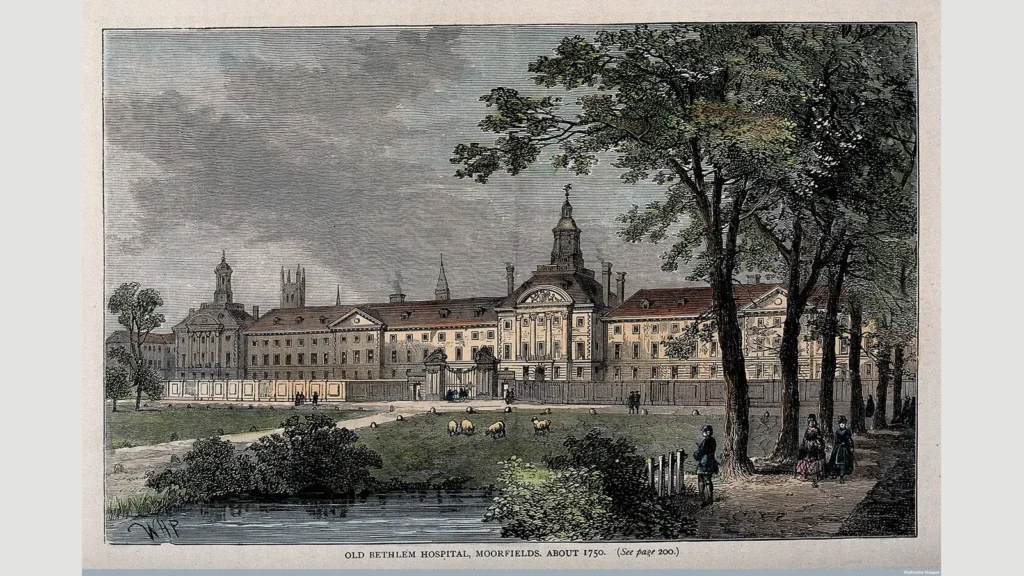
Founded in 1247, the hospital was originally located just outside the city walls, in the Bishopsgate Without area of the City of London. It moved a short distance to Moorfields in 1676, and then to St George’s Fields in Southwark in 1815, before moving to its current location in Monks Orchard in 1930 (Credit: Alamy)
The Birth of Mental Health Charities
In 1879, a visionary named Reverend Henry Hawkins, who served as a hospital chaplain, founded what is now one of the UK’s oldest mental health charities. Originally called The After-care Association for Poor and Friendless Female Convalescents on Leaving Asylums for the Insane, this organization was ahead of its time.
Reverend Hawkins championed a groundbreaking approach to mental health care, focusing on supporting individuals as they reintegrated into their communities. By emphasizing empowerment and providing practical assistance, the charity sought to help those with mental health challenges build meaningful and fulfilling lives beyond institutional walls.
Today, this pioneering legacy lives on through Together For Mental Wellbeing. The charity continues to provide vital support for people experiencing mental distress, remaining a beacon of hope and progress in the mental health landscape.
Reverend Henry Hawkins was the hospital chaplain at an asylum in Middlesex. (Credit: Together for Mental Health)

Post-War Progress
The aftermath of World War II brought heightened awareness of mental health challenges, as individuals and communities grappled with the psychological toll of the conflict. In response, the Mental Health Research Fund was established in 1949, marking a pivotal moment in the evolution of mental health support in the UK.
This initiative not only underscored the growing recognition of mental health as a critical issue but also laid the groundwork for advancing research and care in a post-war society. Its contributions helped to shape modern approaches to mental well-being and fostered a deeper understanding of the complexities of psychological health.
Today, its legacy continues through the work of the Mental Health Foundation. Many will recognize this organization for its impactful initiatives, including the annual Mental Health Awareness Week, which shines a spotlight on mental well-being and encourages conversations that inspire positive change.
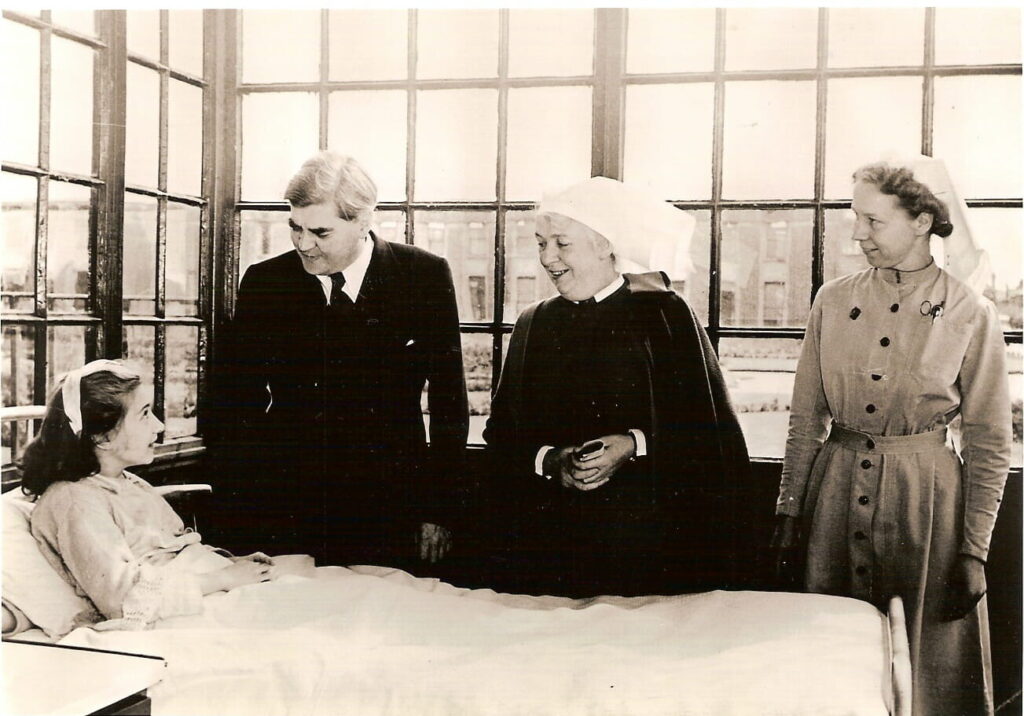
Aneurin Bevan, noted for spearheading the creation of the British National Health Service during his tenure as Minister of Health in Clement Attlee’s government. (Credit: Flikr)
Care in the Community
The mid-20th century marked a transformative era for mental health services in the UK. This period saw the rise of the National Health Service (NHS) as the cornerstone of mental health care, supported by a network of private providers and voluntary organizations. Together, they fostered a more inclusive and collaborative approach to mental well-being.
By the 1960s, a significant shift was underway with the emergence of the Care in the Community movement. This approach arose as a response to the limitations and challenges of institutional care, emphasizing the importance of supporting individuals within their communities rather than isolating them in asylums.
The goal of Care in the Community was to create a more humane and empowering environment for those living with mental health conditions—one that allowed them to thrive in familiar and supportive surroundings. This movement not only redefined mental health care but also laid the foundation for modern practices that prioritize dignity, inclusion, and accessibility.
Waterloo Community Counselling: where we fit in!

Waterloo Community Counselling (WCC) has been a vital part of London’s mental health landscape for decades. Although officially established as a charity in 1995, WCC’s story begins in the 1980s as a local community health project.
Initially created to supplement NHS services, WCC quickly became a lifeline for those unable to access the care they needed through NHS or private providers. Over time, the demand for its services grew, reflecting the challenges many face in navigating mental health support systems.
Today, WCC stands as a cornerstone of local mental health care, offering an impressive range of services designed to meet diverse needs. These include Affordable & Accessible Counselling, Multilingual Counselling for Refugees and Asylum Seekers, Holistic Support, Groups, and Signposting. At its core, WCC is driven by the belief that everyone deserves access to high-quality counselling and the relief and support it brings, whenever they need it.
Through its compassionate and inclusive approach, WCC continues to make a meaningful difference in the lives of countless individuals across the community.
A legacy of compassion & a challenging future
London’s history of mental health care reflects an inspiring evolution—from the days of Bedlam to the modern, community-based services that prioritize personalized care. This journey highlights a profound shift away from institutionalization toward a more compassionate, inclusive approach.
Organizations like Waterloo Community Counselling (WCC) continue to uphold this legacy, offering essential services that adapt to the ever-changing needs of the population. Their work ensures that no one has to face mental health challenges alone.
However, the past decade has brought significant challenges for mental health support across London and the UK. Growing waiting lists, stretched funding, and the closure of critical services have created a crisis that demands attention.